Player-built. Player-run.
A village shaped by its people.
Build a settlement with friends. Give its craftspeople work, keep its winter stores full, and make a home among the people who keep it alive.
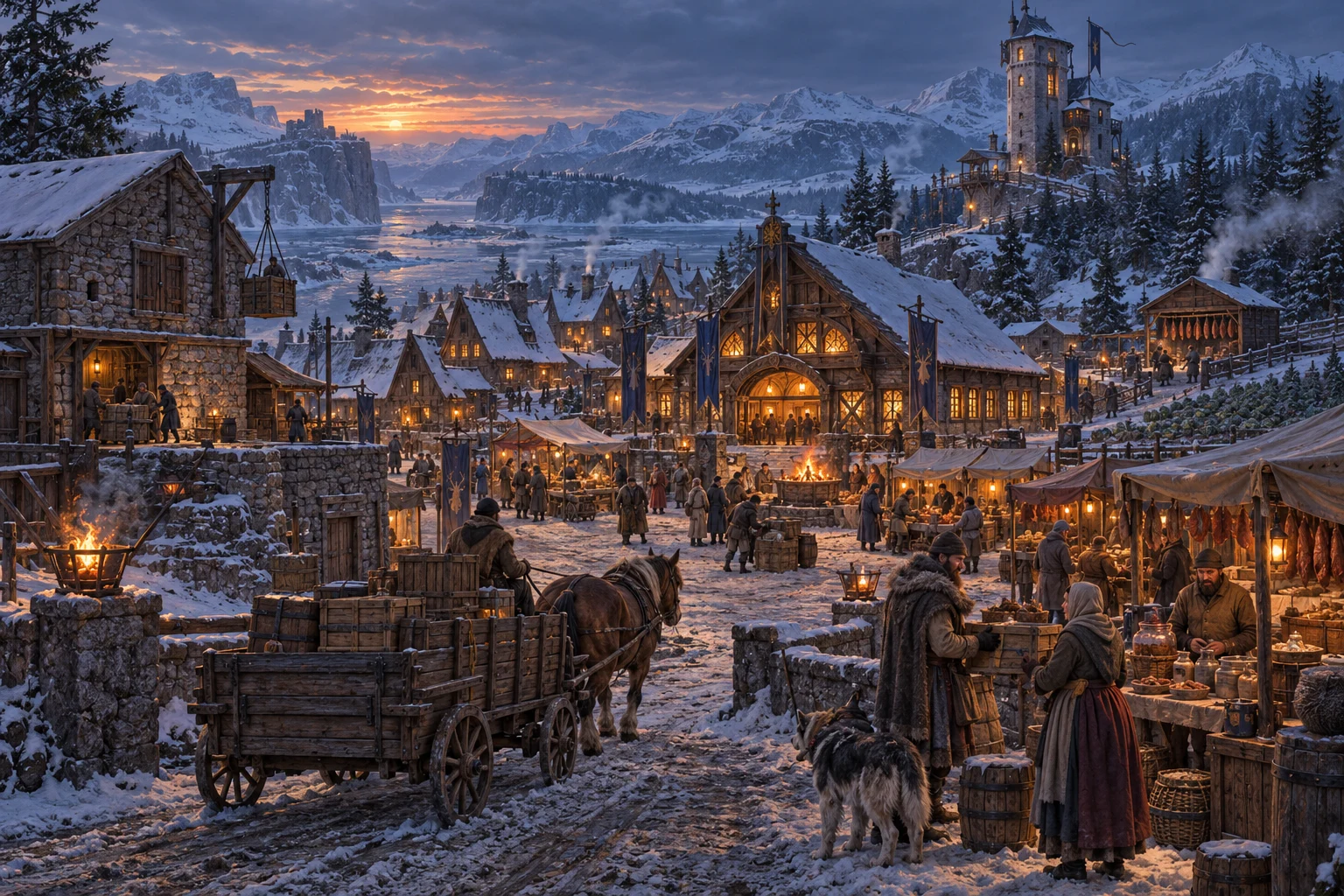
A village needs more than heroes.
One player hunts. Another tends the fields. A third brings a wagon of stone, while a cook watches the hall’s pot and a smith fills the watch’s racks. Their work feeds the same settlement, earns real rewards, and gives other players reasons to visit.
Provinces are places players claim, build and govern in the shared wilderness of Icesus. Your council chooses the buildings, funds the treasury, offers house lots and sets local trade rates. The village grows through what people actually do there.
Work here
Register as a Worker, read the job board and choose useful work. Harvest, haul, build, supply food or make arms; earn experience, standing and, where funded, silver.
Live here
Buy a lot from a council and build your own cottage. Add rooms and fittings, share it with friends, and grow it into a house or tower. Explore player homes →
Run it together
A council has up to five players in total. Citizens and Workers can contribute without a governance vote; NPC settlers live in settlement housing, eat from its stores and pay taxes.
Your first contribution can be small.
-
Find a settlement.
Explore the
province map
. In game,
mission searchfinds available work across provinces andprovince lotslists house lots for sale. -
Find the board.
The entrance signpost points to buildings already standing.
mission registerimmediately grants Worker standing;read boardshows useful jobs, their location, urgency, deposit and reward. -
Choose your work.
Use
mission accept <number>with the number printed on the board. Haul supplies, bring in waiting harvests, repair buildings or answer a shortage. You can build a reputation before applying for citizenship. -
Make a home of it.
Become a regular supplier, buy a house lot, or join a council. Founding is another path: find an unclaimed province stone,
claimit and rebuild from your first Storehouse plan.
You do not need to own a province to matter. Much of its paid work is meant for players outside the council. Read each notice before accepting: most jobs ask for a refundable stake, and each has its own conditions.
Your labour becomes someone else’s next step.
This is a player-run economy with physical goods and local needs. Fell trees for timber, quarry stone, mine ore, haul it to a smeltery and turn bars into useful equipment. A council funds projects and buys what its settlement lacks; outsiders supply it for payment and build standing through board orders.
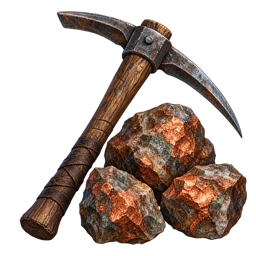
From vein to blade
Player-dug mines have deeper veins and real hazards. Ore purity sets the ceiling of a smelt, while skills, metal mastery and timed bellows work determine the quality you keep. Smiths turn those bars into tools and arms.
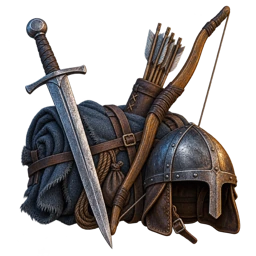
From workshop to watch
Maker-marked weapons, armour and bows can supply the watch. Outsiders are paid for accepted pieces; Arms for the Watch orders add experience and standing. A watchpost houses the racks, and its second tier opens an arrow magazine.
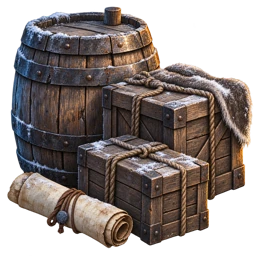
From surplus to shortage
Settlements offer spare food in sealed crates. Workers pack them at the seller’s smokehouse and carry them to the buyer’s storehouse. Food shortages create provisions jobs; the butcher’s prices respond to what the village needs.
Councils set permanent resource pay rates and can post temporary bounties to attract supplies. The treasury pays for accepted goods and reserves promised mission rewards. Full stores leave surplus with its carrier. The economy depends on funded demand, useful deliveries and people willing to make the journey.
Craft careers have their own progression: apprentice guilds, Master Artisans and professional mining, refining and smithing guilds. The settlement gives those skills customers, workshops and a place in the world.
Below the village
Dig a profession out of the mountain.
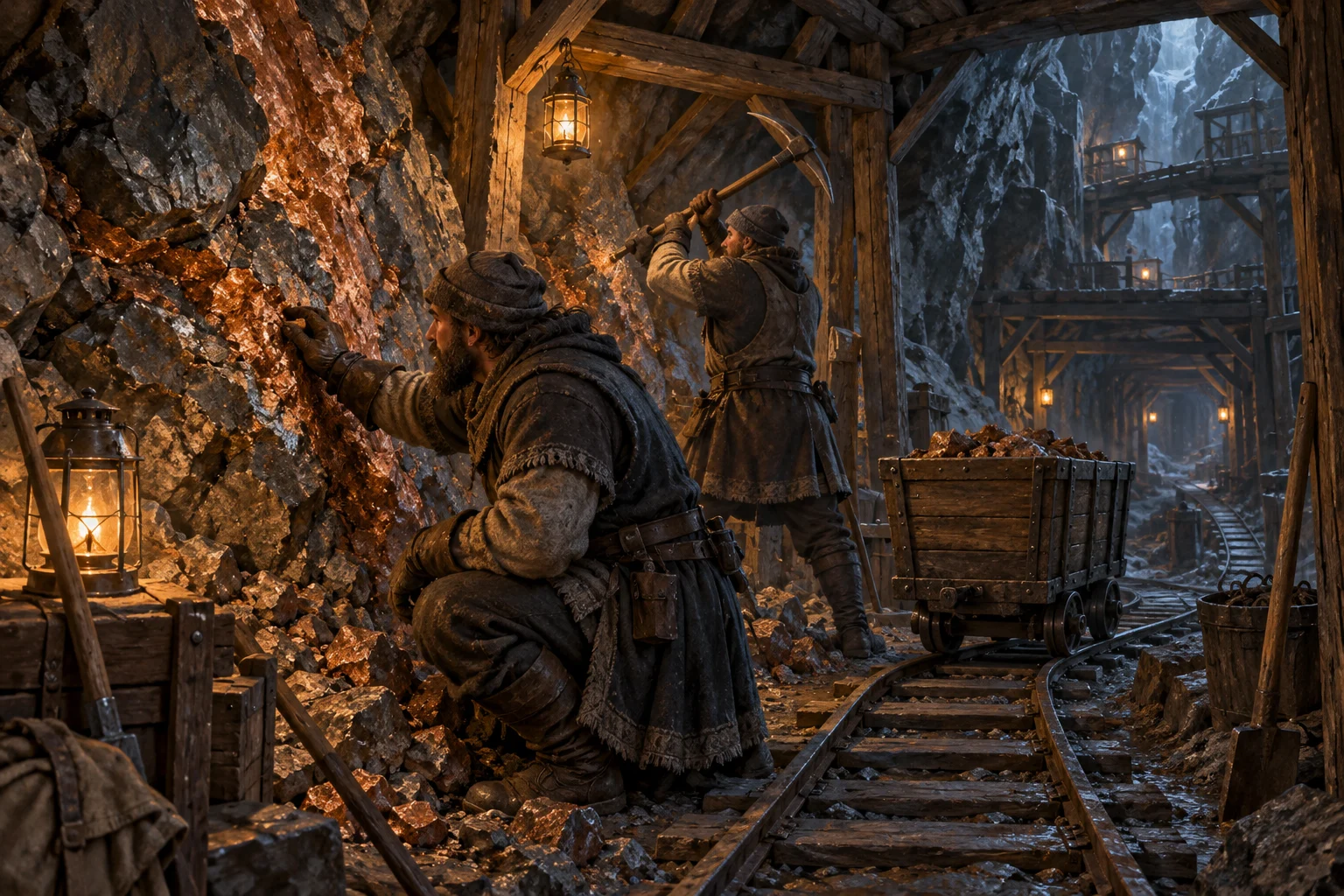
A province mine opens into tunnels your community digs and maintains. Wield a mining pick, follow the mineral veins and work deeper for richer ore. Higher-tier mines open deeper shafts and rarer finds.
The risk grows with the reward: cave-ins, gas and flooding can end a shift. Wooden supports reduce the danger and slow the mine’s wear; inner sense helps you spot trouble before it strikes.
Your haul begins a craft chain. Sort the rubble at the entrance, load the ore into a handcart or wagon, and take it to a smeltery. The quality you win from the rock matters all the way to the finished bar.
- Dig Work the vein with a mining pick.
- Sort Separate the ore from the rubble.
- Haul Load a cart or wagon at the mine entrance.
- Smelt Preserve the ore’s potential in the pour.
A mine has a working life.
mine status
shows the rock left within its reach; near exhaustion,
mine map
marks the remaining seams. An abandoned mine can be upgraded into deeper workings while tiers remain, or reset by the council when its useful life is over.
A living countryside
Work the fields. Bring in the harvest.
Grain, roots and greens grow in the farm’s tilled rows. The work changes with the year: sow in spring, weed in summer, reap in autumn and mend the fences in winter.
Check the farm’s sign or the job board’s “Today’s work”. One person can take the farm’s daily turn. A few minutes of work train your farming skill, earn experience and standing, and leave you a share of the yield to cook.
The farm’s daily produce waits where it grows. A council member, or a Worker with a Bring in the Harvest order, must use
province collect
to carry it into the food stores. Fresh harvest spoils while it waits, even when the larder is empty.
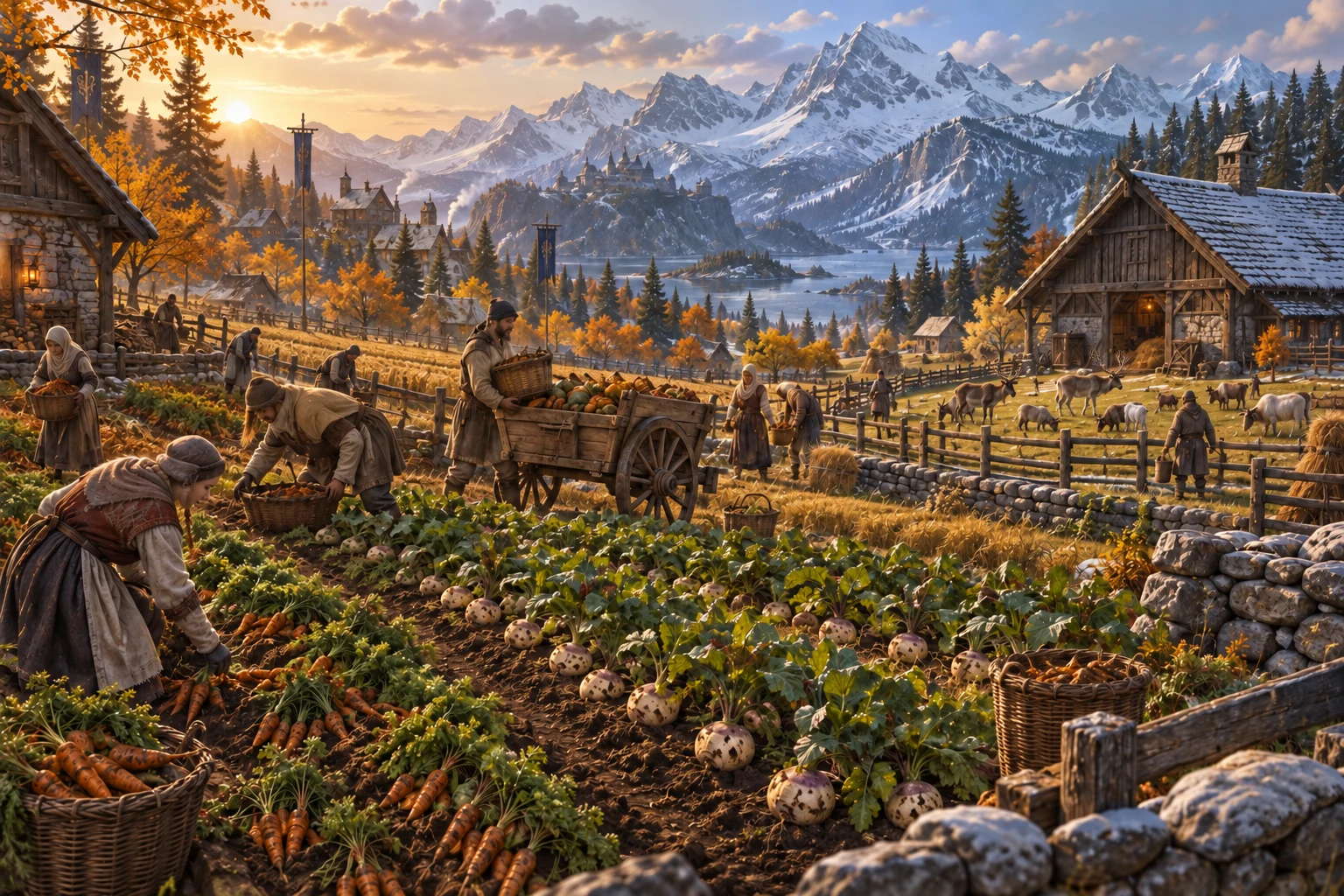
-
Spring
sowthe waking fields. -
Summer
weedthe growing rows. -
Autumn
reapthe harvest. -
Winter
mend fencesfor the year ahead.
tend farm
chooses the current season’s work. Pastures have their own herding work, reindeer and goats; dairy improvements add milk, butter and cheese. Together with fishing and hunting, the fields give a village the variety its winter stores need.
Feed the village through the winter.
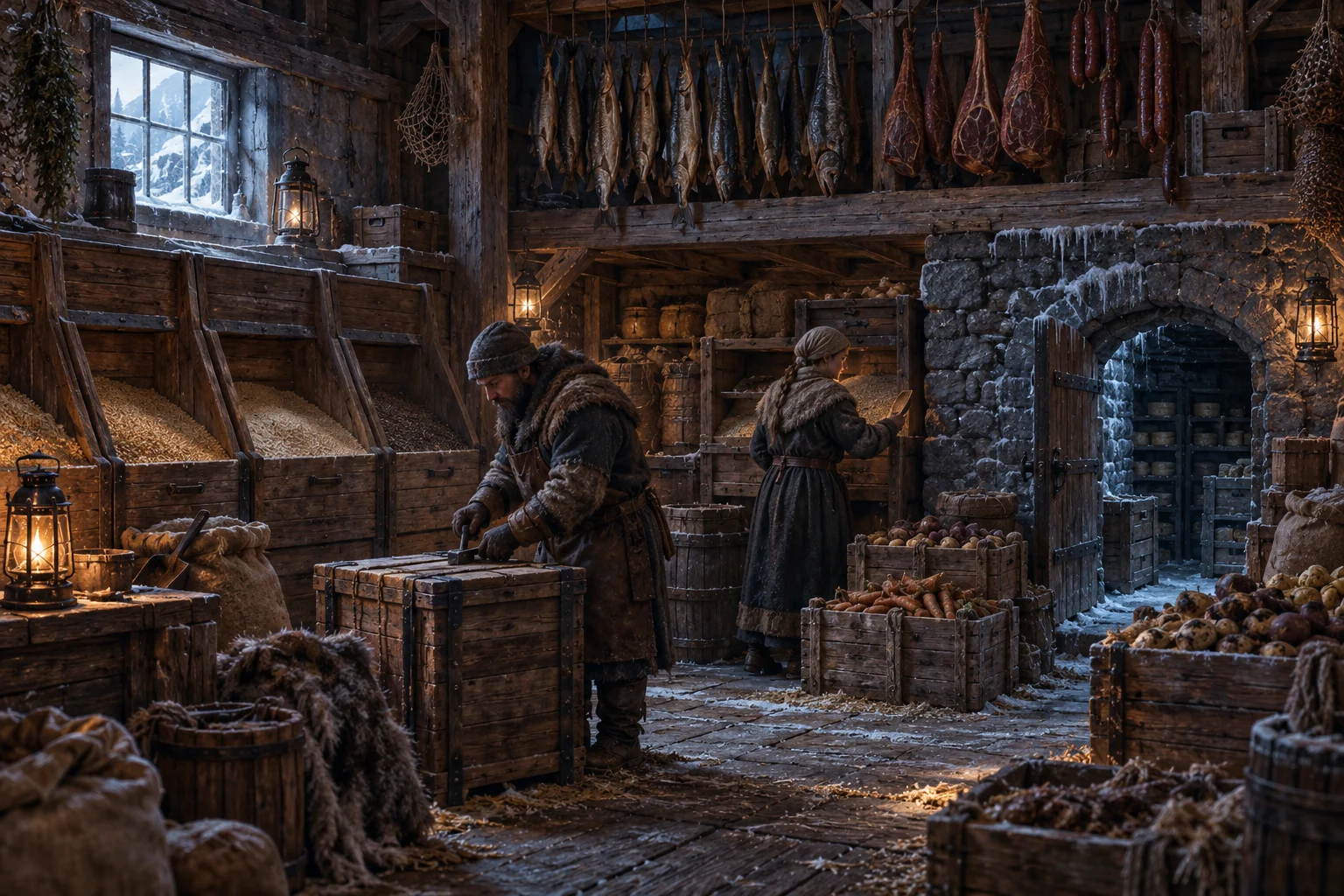
Fields peak in autumn and produce nothing in winter. Pastures and fisheries slow in the cold. Fresh fish, meat and dairy spoil, so someone must collect the harvest and preserve what the village will need later.
The stores track food by kind. Granaries, ice houses, cold cellars and smoke lofts add storage and reduce spoilage. At a smokehouse,
cure stores
turns stored meat and fish into food that keeps.
Variety and enough food help the settlement work well. Hunger hurts morale and slows production and construction; empty stores drive settlers away.
check food
shows what is waiting, what is being eaten and how long the current supply lasts.
A shared winter goal
Contribute to winter stores and help the whole settlement reach its goal. Success earns a free feast that the council can call when helpers are around.
A place at the table
Councils can call a seasonal feast. Cooks bring their own dishes to a contest, and guests share the cheer. Season-end news recognises well-fed settlements and the people who supplied them.
A craft worth practising
Recipe cards, timed cooking stages, seasonal dishes and meals with useful effects make the kitchen a profession. Supply the hall’s shelf and earn coin when servings sell. Discover cooking →
Your front door belongs in this world.
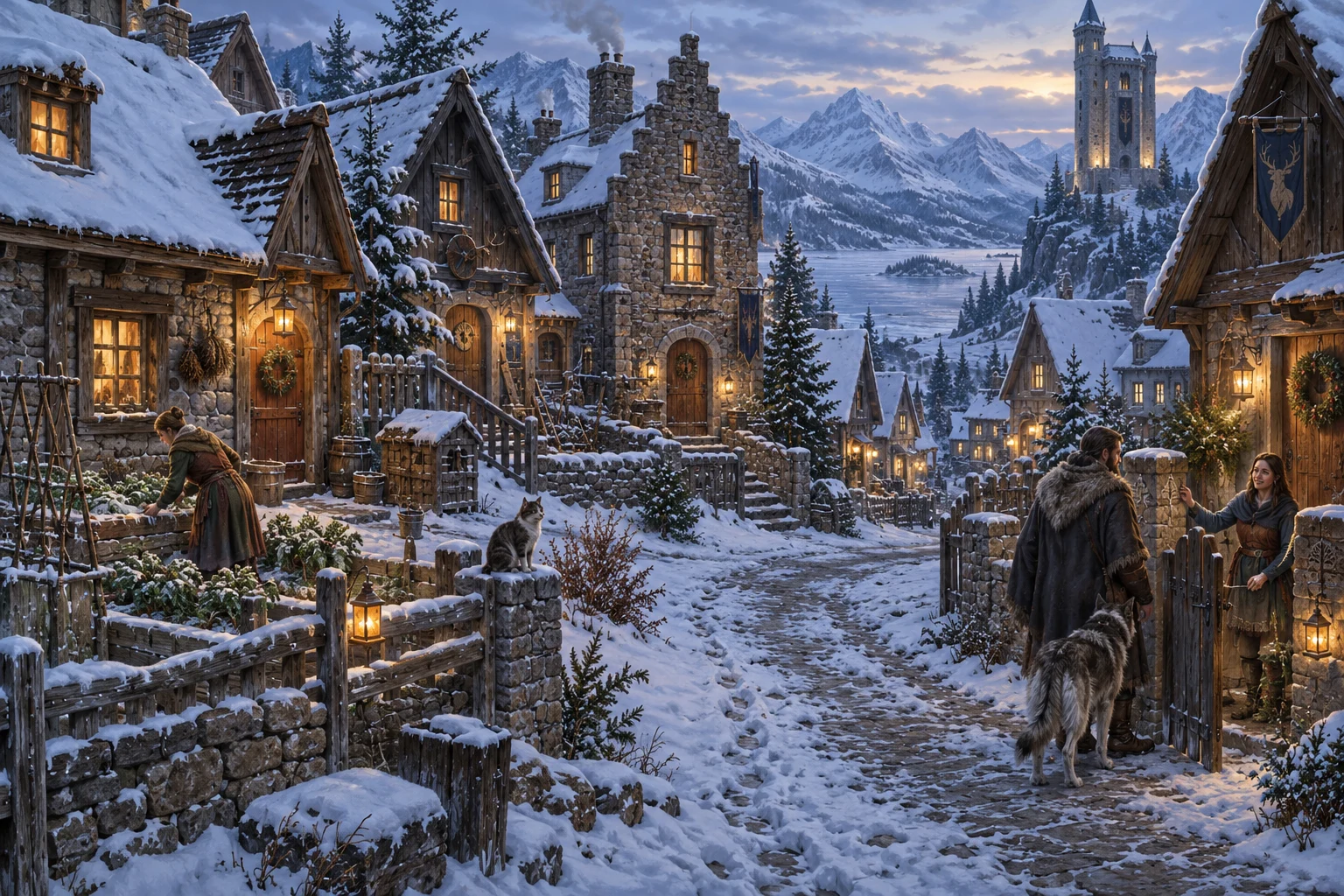
Settlement housing attracts NPC residents. Player homes are different: a house you own, on a lot your council sells, with rooms you can describe and access you control.
Start with a cottage. Add a vault, stable, trophy wall, arms display or garden, and grow through house, tower and great tower. A home can move whole to another province, carrying its rooms and secured storage.
At the end of a journey, a blessed latchkey opens a doorway of frost back to your hall. Your home is somewhere to return to, share and keep making yours.
See homes, towers and the Outfields →Decide what rises next.
Build on a grid of terrain lots, prepare ground, supply materials and work with a hammer. Ready stages advance at the foreman’s Creation-day inspection. Public buildings currently grow through Restored → Improved → Advanced ; Legendary public buildings remain reserved. Player homes have their own four-tier ladder.
A village that provides
Storehouse, inn, settlement housing and stables support everyday life. Farms, pastures, fisheries, smokehouses and food halls keep people fed.
A village that makes
Mines, smelteries, sawmills, quarries, clay pits, charcoal pits and workshops turn gathered resources into construction supplies, fuel, tools and equipment.
A village worth visiting
Shrines offer consecrated services and homeward blessings. Moon portals connect travel destinations; a watchpost gives craftspeople a place to supply the settlement’s defence.
Terrain matters: favoured ground helps buildings produce more, while gathering drains finite resources and can turn a forest into cleared meadow. Remote settlements offer stronger gathering and shrine benefits, with longer journeys to reach them.
Permanent building improvements create further choices. Keep treasury funds, maintenance and food in mind: a larger settlement asks more of its people. Advanced construction can wait between visits without stalled-work penalties; upkeep on the existing building continues.
A settlement remembers your care.
Economy
Crafting, regular harvests and stocked stores strengthen the economy.
Population
Roofs, food and a welcoming inn sustain the NPC settlers.
Defence
Maintained buildings, paths, hunting in the territory and arms on the watch’s racks help protect the settlement.
The three pillars fade when neglected. Bring all three to their peak together and the province Flourishes , announced across the valley. Keeping a village alive is an ongoing shared achievement.
Before you set out
Can I help without joining the council?
Yes. Register as a Worker for immediate access to suitable work. Citizenship is a separate application, and council membership is a separate invitation with governance responsibility.
Does settlement building cost real money?
No. Lots, plans, supplies and commissions use currency and materials earned in play. Icesus is free to play.
Can I start on my own?
You can found a small province alone. Larger settlements take sustained work, so recruit council members, citizens and suppliers as you grow.
Where are the detailed commands?
In game,
help provinces
gives the overview, and
help province buildings
,
help province construction
,
help province food
and
help province missions
go into detail;
help homes
covers a home of your own. The wiki keeps the same guides, starting at
Provinces
. The
province map
helps you find existing settlements.
Build something people come back to.
A reliable supplier. A house by the hall. A village ready for winter. There is more than one way to leave your mark.
Play Icesus for free →