Crafting & economy
Make something
worth trading.
Learn a craft and turn herbs, hides, timber or ore into potions, bags, chests and tools. Use them yourself or sell them to other players.
From the wild to the workshop
Turn what you gather
into what you need.
You can follow a material through every stage, or specialise in the part you enjoy. A gatherer supplies a craftsperson; a craftsperson equips another adventurer.
Gather
Gather herbs and mushrooms, skin a hunt, fell a tree or work a mine. Bring the right tool and learn to recognise what you have found.
Refine
Prepare recipe ingredients, tan a skin, hew and saw wood, or smelt ore. Your skill shows in the material you end up with.
Make
Brew from a learned recipe, choose a leather item, or follow a carpentry design or smithing plan.
Use or sell
Carry it on your next outing, offer it to another player, or find a shop or settlement that needs it.
A hide becomes a travelling bag.
- 1. Bring back a skin
For this example, obtain a fresh moose skin from a hunter or a successful hunt. If you gather it yourself, a knife or dagger, skinning and craftsmanship help recover the hide.
skin corpse - 2. Prepare the leather
Tanning preserves and softens the skin. Train the skill and use a suitable tanning workshop.
use tanning at moose skin - 3. Work the piece
Set up leathercrafter’s equipment and estimate the skin before committing. A bag needs a large enough hide; the skin from an ordinary wolf is too small.
setup equipment
estimate moose skin for bag
make bag from moose skin - 4. Put it to work
The finished bag is a usable container with its maker recorded. Keep it for your travels or offer it for sale, then pack your equipment.
pack equipment
Wood becomes a chest.
Tree → timber → planks → storage
Loggers fell trees, hew logs and saw timber into planks. A carpenter works from a design: a chest needs planks chosen for strength and beauty. The same craft also makes herb boxes, barrels, canoes and wagons.
At the Apprentice Carpenters’ design rack, designs lists what you can buy. With the design, tools and materials ready, begin with work on new <thing>.
Ore becomes the next tool.
Ore → metal bar → forged tool → more gathering
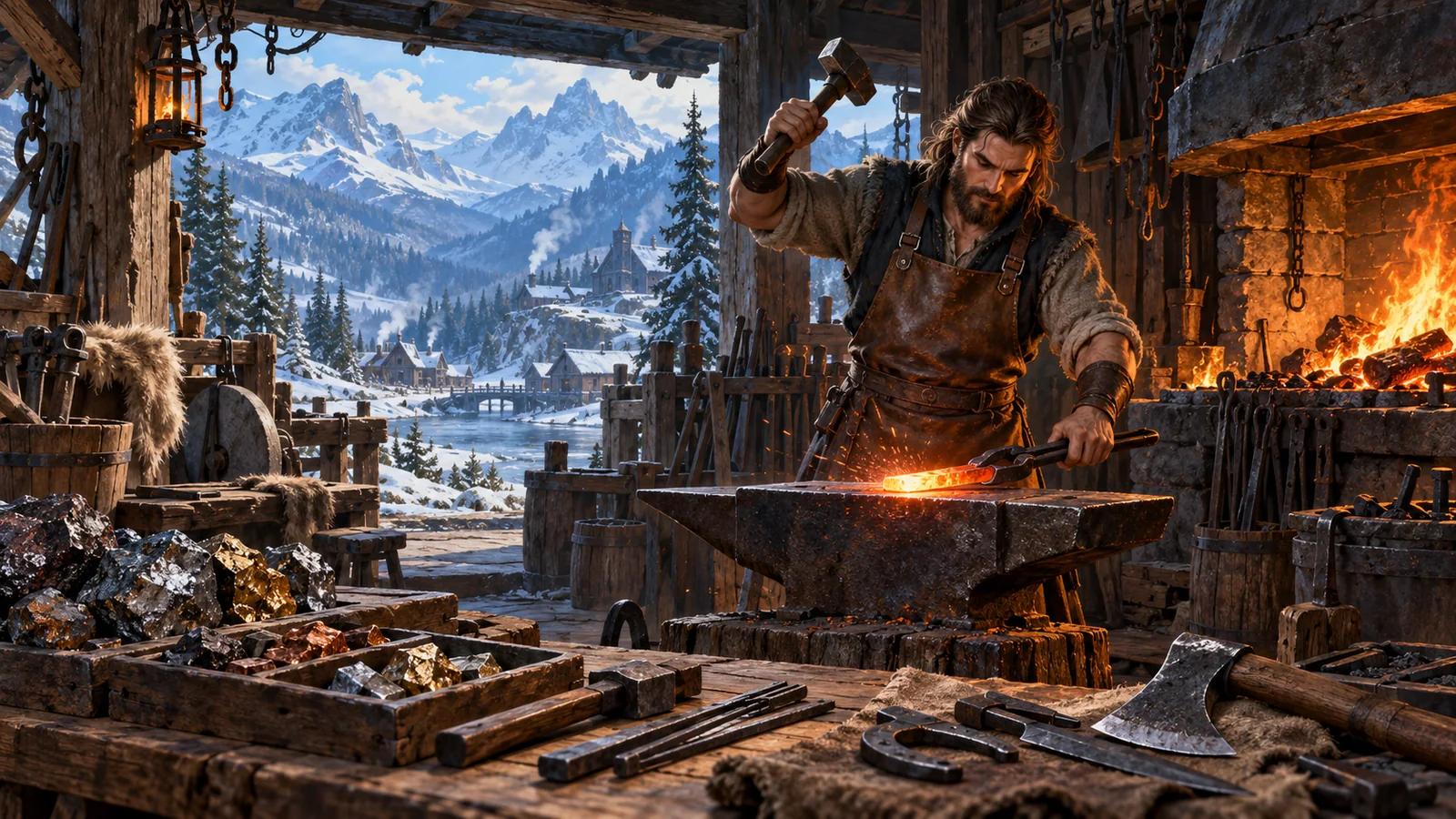
A miner brings ore to a province smeltery. Copper and tin can become bronze; coal fuels the process. A trained smith follows a plan, forges the piece, tempers it and finalises the equipment.
Smiths also forge mining picks, felling axes and two-man saws, so the gatherers get better tools from the forge.
Some items take two crafts. A ring mail vest needs a smith’s rings and a leathercrafter’s hide. You don’t have to make every part yourself.
Alchemy
Potions from
what you find.
A mushroom you pick up on the road can end up in a potion you drink later. Alchemists gather their own ingredients, collect recipes in a book and brew.

Herbs & mushrooms → learned recipe → brewed potion → supplies for adventure
Make a potion of health.
Mantaroot and brown boletus are ingredients in this healing brew. Learn the recipe, carry it in your recipe book and gather or buy what it calls for. In suitable outdoor terrain, gather here searches for ingredients. recipes potion of health shows the ingredients in your book.
With an alchemy set and the required supplies, craft potion of health prepares your equipment and begins the work. pack alchemy set puts the portable setup away again.
A successful brew heals injuries when used. Its potency depends on your brewing, alchemical theory, knowledge of ingredients and mastery, so the same recipe brews stronger as you improve.
Other brews.
A potion of stamina replenishes endurance. An elixir of health can also close a bleeding wound. The craft extends to mixed medicines and salves, poisons, powders and incense, using different recipes and tools.
Learn in Atherton.
The School of Alchemy is a side guild you can pursue alongside your main adventuring guild. Yaudric teaches recipes; Aboawyr’s shop sells alchemical equipment, recipe books, empty vials, mixing bowls and herbs. Check the school’s entry and training requirements when you visit.
Learn the work
What each
craft needs.
Every craft needs training, tools and a suitable workplace. Start with one simple object and move on to finer work as your skills improve and better workshops open to you.
| Craft | What to bring | Where to grow |
|---|---|---|
| Alchemy | An alchemy set, a learned recipe in your book, its ingredients and empty vials. Mixed medicines use a mixing bowl. | The School of Alchemy in Atherton teaches potion brewing, herbalism, mushroom knowledge, ingredient knowledge and potion evaluation. Yaudric teaches recipes. |
| Leatherwork | A usable skin, a knife and leathercrafter’s equipment. | Leathercrafters teach skinning, tanning, tailoring and leatherworking. Use a guild tanning bench; higher province leatherworks support rarer materials. |
| Carpentry | The design, its specified wood and a carpenter’s tools. | Begin with the Apprentice Carpenters. Later schools develop fine woodwork, structural timber, carving and toolmaking. check tools and maintain tools keep your kit in shape. |
| Mining & metalwork | A wielded pick for mining; ore and coal for smelting; bars, a smithing hammer and a plan for forging. | Apprentice Miners teach mining and mineral identification. Refining and smithing are later artisan specialisations. Picks wear, and better picks handle more demanding work. |
Start with leatherwork in Vaerlon.
Denso, in the Fur Trader’s Workshop off the Street of Stone Walls, offers introductory skinning and leatherworking training. Degtog’s fishing and hunting shop below the Survival Guild stocks portable leathercrafter’s equipment. Begin with an ordinary bag and a suitable skin; add tanning to your skills as you develop the full craft.
Choose for the job
Pick the right
material.
A rarer ingredient is only useful if it suits the thing you are making. Read the design, inspect the material and use the craft’s estimate before you spend it.
Strength or beauty?
A chest calls for both. An herb box asks for quality and beauty. Structural parts have specific woods: oak beams, yew trusses, larch panels and maple joinery each have their own place in construction.
Purity and practice.
Ore purity, refining knowledge, mastery, bellows work and furnace quality affect the bar you produce. Smelting is a craft of its own, between the mine and the forge.
A skin worth keeping.
Skinning, tanning, your knife and your working equipment all affect the hide. Estimate a hide for the intended item before you cut it into a finished piece.
Beyond the workbench
Selling what
you make.
Adventurers buy equipment and storage, gatherers buy tools and other makers buy prepared materials. Knowing what sells is worth learning too.

Use it yourself.
Before you have customers, you can use what you make: a potion for the next fight, a bag for your kit, a chest for your belongings, a better tool for the next job.
Learn the shop’s price.
In a shop,
listshows its stock,view <number>inspects an item andvalue <item>gets an offer. Shops accept different kinds of goods.Trade with players.
Search merchant stock with
booth search <word>, including recent sale prices. Visit a booth, usebooth listfor its stock, thenbooth view <number>to inspect a piece. Direct player vendors provide another way to buy and sell.Grow into a merchant.
Booths can sell while their owners are away, with proceeds banked after tax. Merchants train appraisal, bargaining and shopkeeping. Some qualified booths also offer delivery for a runner’s fee.
Players build the stalls too.
A merchant’s covered stall needs a carpenter’s larch panels and roof frame. Better stalls use more advanced woodwork.
Provinces need supplies.
Provinces are settlements built and run by players. Councils develop the workshops and set local booth taxes, and inhabitants and visiting adventurers keep the work going. A province runs on building supplies, meals and trade.
Your next useful thing
What will you make first?
Learn a skill, gather the materials and make your first piece.