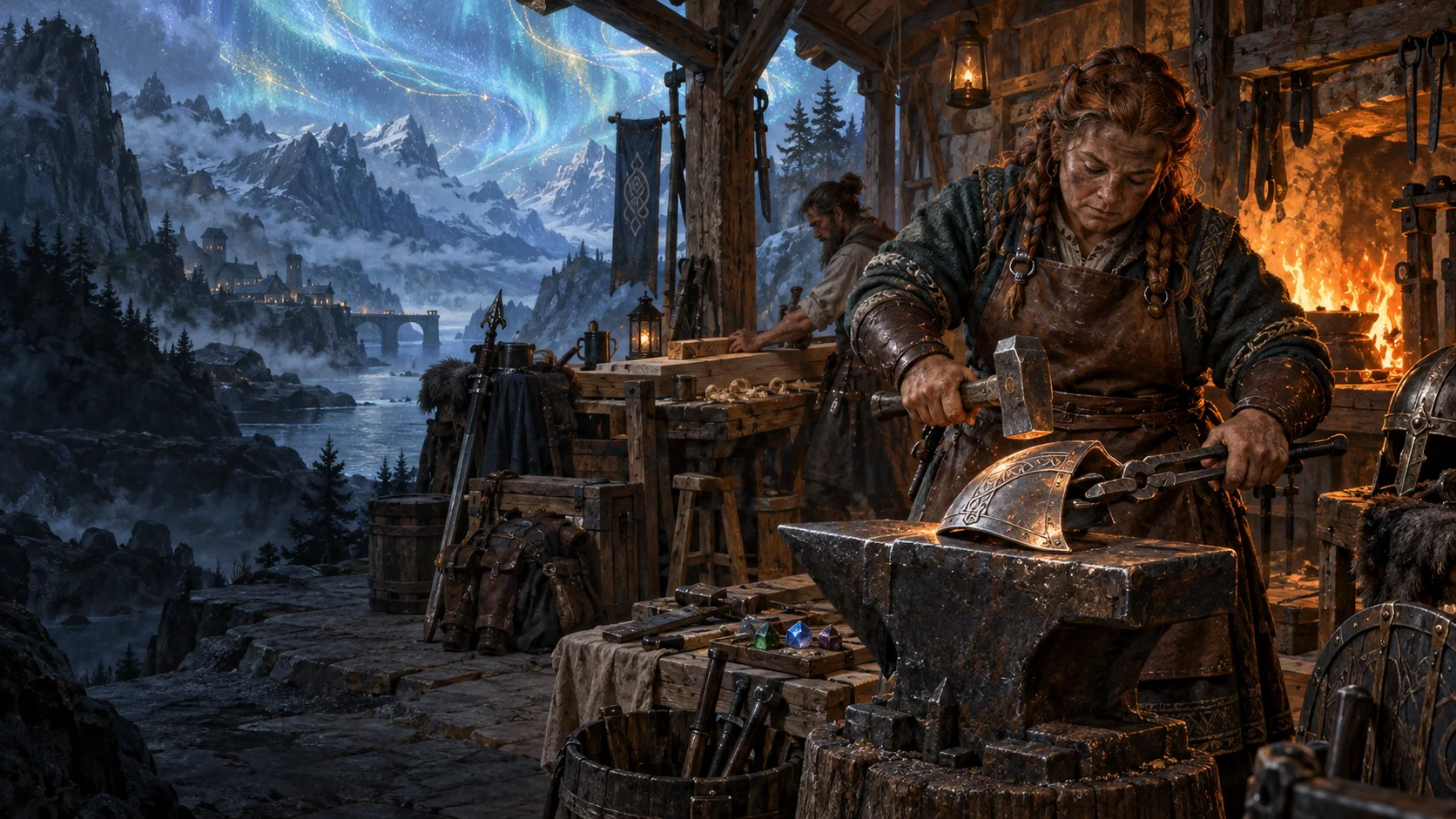
What this guild is about
Make yourself useful to a world.
Turn raw materials into the things a community needs. The Master Artisans bring miners, refiners, smiths, carpenters, loggers, gemcutters, leathercrafters and scale crafters into a shared professional tradition. This training can accompany an adventuring calling, adding skilled work, equipment services and province construction to the ways you contribute to Icesus.
An artisan changes what other people can attempt. A repaired piece of armour returns to battle, prepared timber becomes part of a building and a carefully cut stone carries the mark of the hand that finished it. The satisfaction comes from knowing materials, tools and places well enough to produce dependable work. The Master Artisans teach the shared foundation; individual branches teach the trades themselves. This path suits players who want progress to leave a physical result, enjoy supplying a community and like a working life that can continue between expeditions. Skill matters, and so does the workshop where that skill is used.
You might feel at home here if…
- Choose a trade and learn its materials and tools.
- Connect workshop work with the needs of other players.
- Let each finished piece or building show your progress.

Lore & origins
A hall where the trades meet
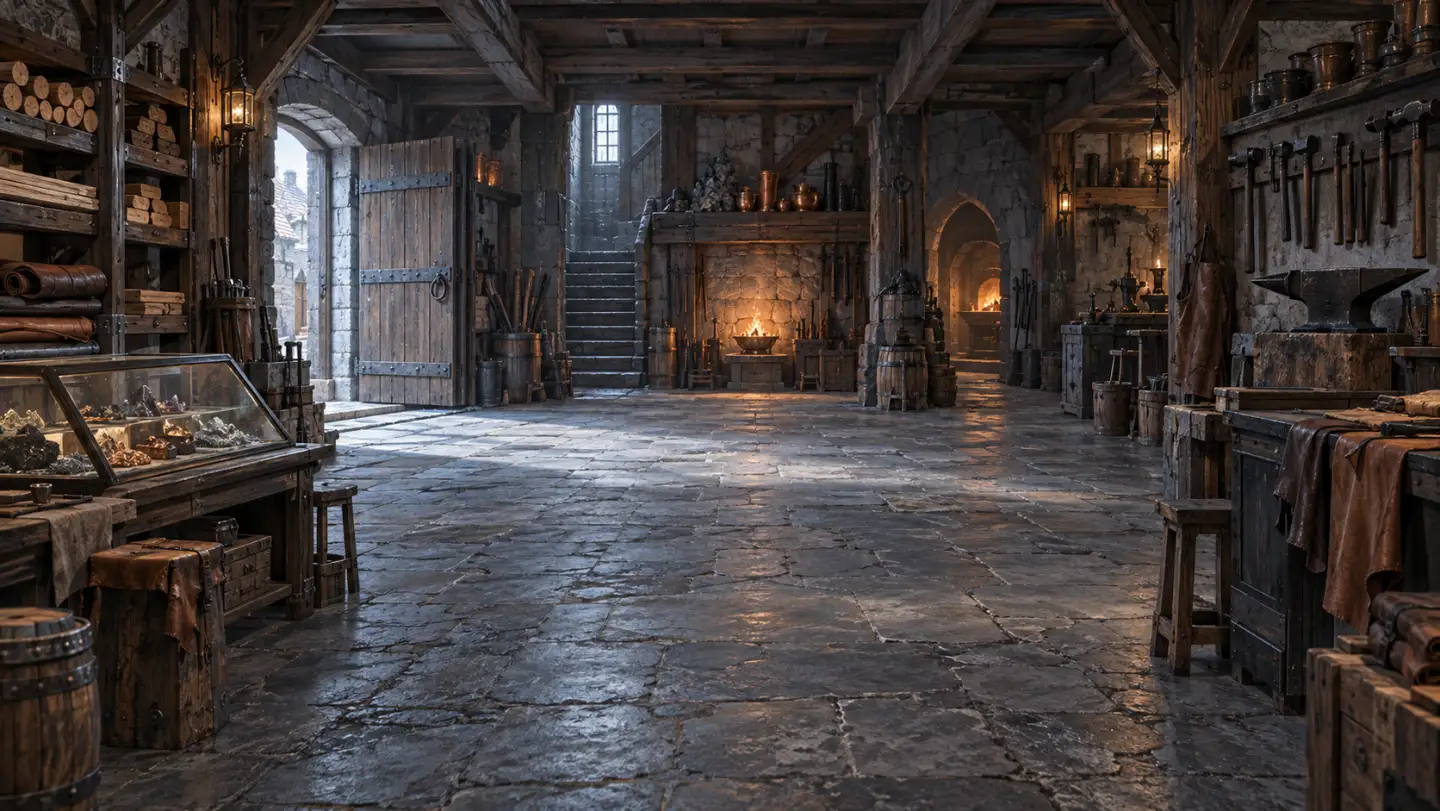
The Hall of the Master Artisans in Vaerlon presents the professions through the things they handle. Ore specimens and surveyors' notes occupy one bay, seasoned timber another, cured leather a third. Smith-hammers hang beside a representation of the forge. A guild tree lies beneath glass, making the relationships between branches something a newcomer can inspect. Cold still enters from the Street of Stone Walls despite the brazier. The hall's character comes from useful objects and experienced hands rather than from the promise of effortless transformation.
Each adjoining workplace has its own memory. The Refiners' low hall holds working furnaces, cooling bars, crucibles and an assay ledger. The Smiths' granite room carries patterns for blades and armour, named tools above anvils and a Fire-priestess's mark beside the hearth. An older Earth-priestess's mark survives in the shared hall. The Gemcutters occupy a narrower, colder space, with grit, borrowed loupes and a scarred practice bench. These details place faith, repeated labour and inherited knowledge inside the ordinary working day without turning every craft into a priestly vocation.
The family extends beyond the central building. Loggers work from a plain wooden hall and learn to recognise, fell and prepare timber. Carpenters need both practiced hands and suitable tools. Leathercrafters handle another set of materials, while the scale-crafting tradition maintains valuable equipment brought back from the world's dangerous creatures. The Master Artisans coordinate these professions rather than replacing their individual teachings. To belong is to enter a network of dependencies: someone extracts, someone prepares, someone shapes and someone uses what the work has made possible.
A place in the world
The artisans’ complex, Vaerlon
The shared hall opens from the Street of Stone Walls, with mining and refining nearby and the smiths above. Other trades maintain their own workplaces. Guild practice spaces lead toward the more capable facilities that provinces build for serious production.
Explore the world around themTheir role in a fight
Equip the people who take the risks.
The artisan contribution is preparation, equipment and the built world that supports adventures. This is a craft family you can develop alongside a combat calling. The role you take during a fight comes from that other training and your equipment; artisan work helps determine what is ready before the party sets out and what can be restored when it returns.
With a party
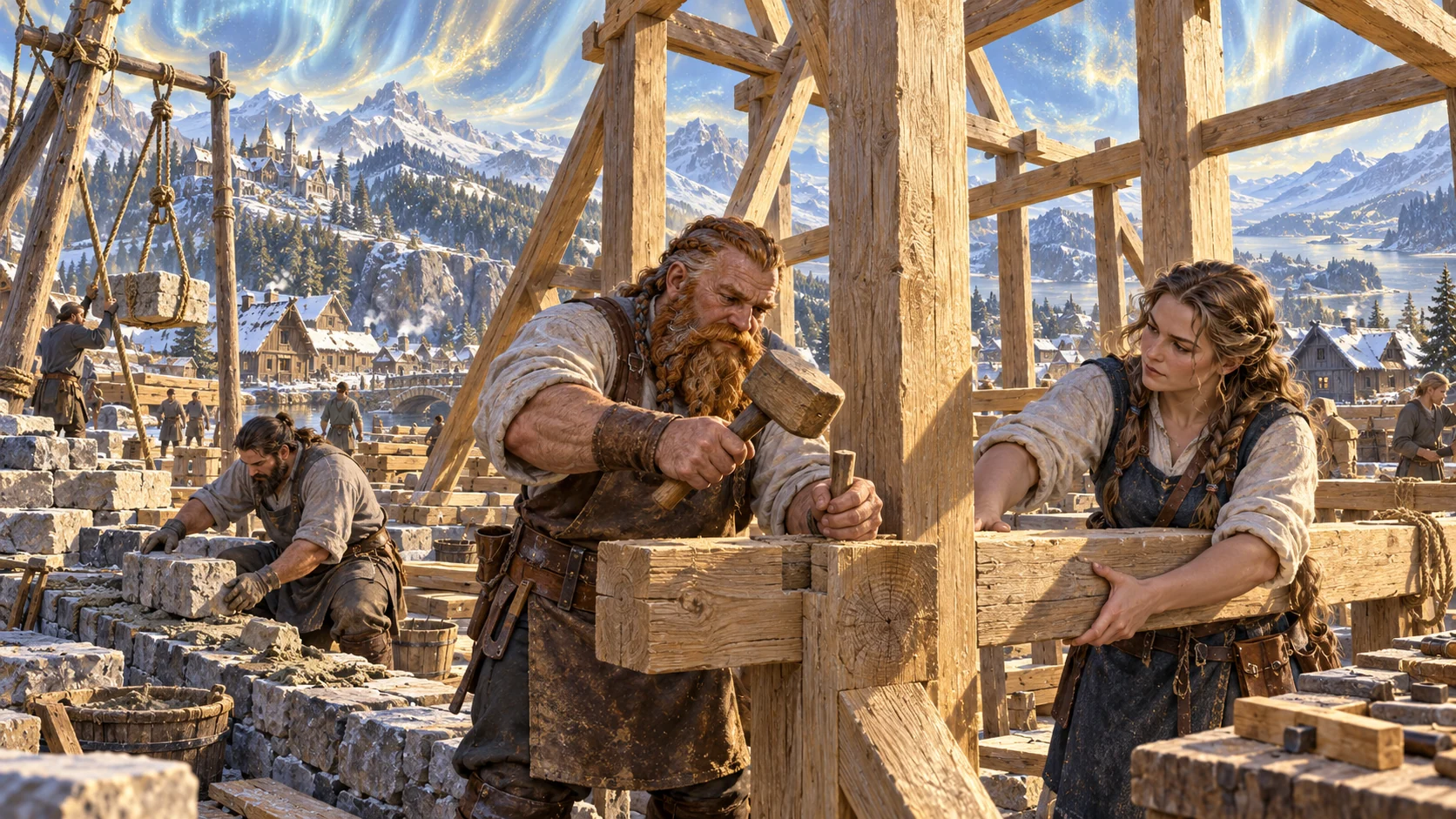
A group gains practical value from someone who understands its material needs. Equipment service, prepared resources and construction support can connect your workshop time to the next expedition. Coordinate what is needed before investing in supplies or a specialised job. Your useful contribution may happen before the first attack, then remain visible in the equipment everyone carries.
On your own
A solitary session can still produce something tangible: mine material, prepare wood, work at a suitable station or practise a specialist trade. Some processes reward close attention, such as watching a gem for a promising facet or a developing flaw. Choose work your training and facilities support, and let the result become part of your longer professional progress.
The choices you make
Materials, tools, facilities and guild standing all constrain the work. Membership of the coordinating hall does not grant every trade, and a practice bench is not equivalent to a developed province workshop. Rare materials and unusual equipment bring additional limits. The rewarding decisions concern where to specialise, what to invest in and which jobs your current preparation can actually deliver.
Power, explained
Signature abilities
Mining
Extract useful material
With a mining pick wielded, the miner works deposits and develops the practical knowledge behind extraction. Mining skill improves speed, ore purity and wear on the pick, and also helps with stone, clay and splitting ore. Suitable tools and the ability to work a particular ore matter alongside the desire to dig it out.
Carpentry
Make functional wooden work
Carpenters turn timber into useful objects and structures. Knowledge alone is insufficient: tools and the quality of the workshop affect the result. Experienced workers can make tools that suit them, while stronger province facilities let skill express itself more fully. This connects personal training to the larger effort of building a capable place to work.
Gem Cutting
Read the stone and choose when to stop
Work a stone on a grinder, judging its promise as successive passes reveal the cut. A bright facet invites a timely response; a hairline demands care or an immediate stop. Equipment, lighting and knowledge influence the work. The guild bench supports practice, while province cutting rooms provide the facilities for more demanding results.
Construction
Turn skill into settlement progress
Construction knowledge helps raise buildings. At a province construction site it contributes when you use the build command, alongside relevant crafts such as carpentry and masonry. You do not need a separate use-construction action there. The result ties an artisan's training to a visible shared structure and the community that will use it.
These are examples from the guild’s wider training. Availability and strength depend on your guild path, skills and current game rules; an initiate starts with a smaller repertoire.
Learning the tradition
A profession learned at the workbench.
Qualify for the Master Artisans through completed apprentice craft training or the Logger's Hall route, then use the coordinating guild to open access to specialist branches. The hall advances through advancement points; profession levels do not advance it. Branch membership and its own requirements remain necessary for the work you want to learn. Smiths, Refiners, Gemcutters and the other trades have distinct curricula and facilities. Start with a concrete craft goal, inspect the current guild requirements and build the skill, materials and workshop access that goal needs. This makes the next stage of professional training a practical choice with an identifiable result.
For a first character, the guided builder offers a selection of starting professions. The complete guild reference and in-game teachers explain entry requirements and further training.
-
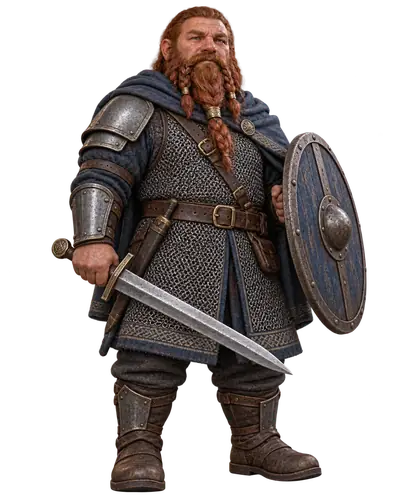
Weapon combat · Defence
Army
Train for the moment another person needs you to stand firm. Choose agile weapon work or armoured endurance.
-
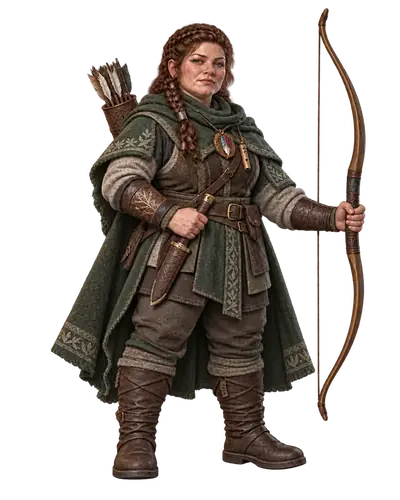
Bow & blade · Wilderness
Rangers
A hunter’s eye, a fighter’s hands and a life spent learning the wilderness. Fight with bow, blades and nature’s magic.
-

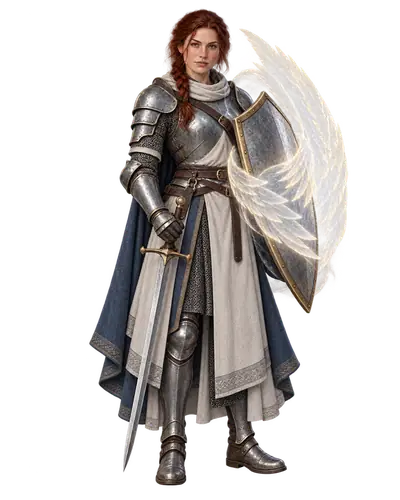
Elemental knighthood · Defence
Templars
Elemental knights with martial training, sacred bonds and an uneasy place in a changing world. Faith must prove itself in service.
A place in the valley
Find the people
you want to become.
Choose a race and a first profession. Meet your teachers, learn your craft, and find the companions who will come to rely on it.
Icesus is a persistent text RPG. The paintings illustrate its world; you play through words.