Combat & parties
Strength
in company.
Someone holds the line. Someone keeps them standing. Behind them, a spell is almost ready.
Choose your place in an Icesus party. Arrange a formation, bring your guild’s strengths and face the next fight together.
Find your place in the line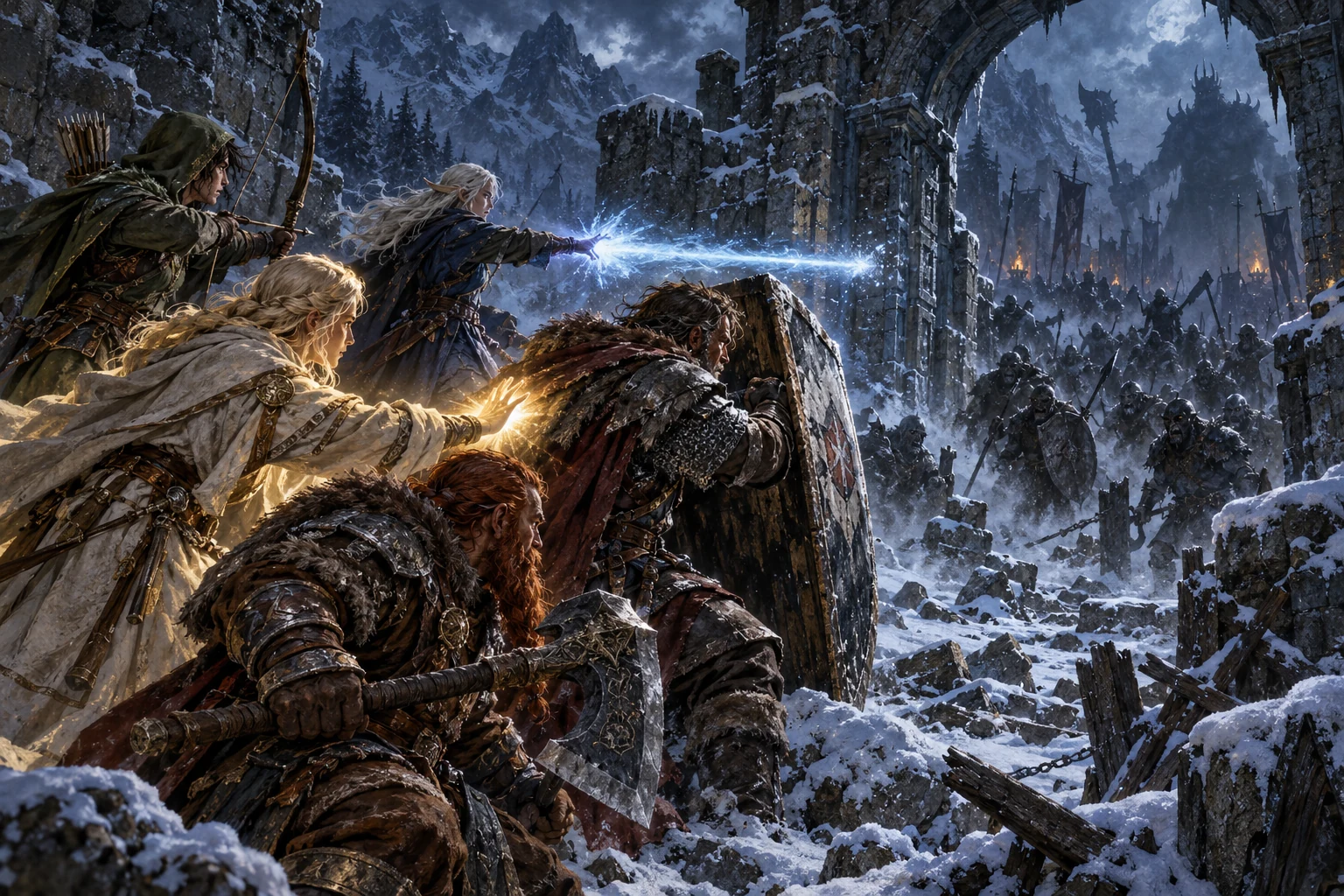
01 / Read the fight
A battle has
its own rhythm.
Icesus is a text RPG. The fight unfolds in words: blows land, spells build and openings appear. Ordinary melee attacks continue automatically while you choose the actions that change what happens next.
Set your balance
Divide combat points between attack, defence and casting. Choose a fighting style you have trained: Warding favours survival; Berserk trades defence for harder, faster attacks.
Take the opening
Use your guild’s skills and spells, choose a target and watch for momentum. These brief opportunities can let you release a manoeuvre instantly; casters have spell impulse.
Know when to leave
Watch health, magical reserves and endurance. Retreat takes time, and trained retreat skills help. A wimpy setting can start your escape when health falls too low.
Learn the controls in the combat guide.
02 / A place for everyone
Three rows.
Three columns.
One company.
Your formation gives teamwork a shape. The foremost ally in each column takes the regular melee pressure, covering companions behind them.
If that place opens, someone behind advances. Keeping the line intact matters to the person preparing a spell just as much as the person carrying the shield.
An example formation. Choose positions to suit your party.
Inside the formation
The ally in front buys you time.
The soldier stands ahead of the mage in the centre column. Regular melee aimed down that column meets the soldier first.
Protection has limits
Spells and special attacks can still threaten the rear. Some trained flankers can strike from behind the front line against suitable foes.
A roster is bigger than the line
A party can have up to 15 members, with nine formation places. Members outside the formation do not gain its melee protection. Minions can take a place, too.
03 / Bring your calling
Different paths.
A shared purpose.
A guild gives you ways to help the group. Your training, equipment and chosen abilities decide which ones you develop. These roles overlap; build a company around the people you have.
Hold the line
Army soldiers bring weapon discipline and battlefield orders. Templars mix armed combat with elemental protection. Waterpriests can build around armour, shields, channeling and magical defence.
Keep everyone going
Airpriests restore health and treat lingering harm. Waterpriests can sanctify the ground and channel elemental mana, helping nearby companions recover magical reserves between demanding fights.
Find the weakness
Mages combine a spell’s shape with a damage type suited to the enemy. Infecti probe vulnerable minds, or turn to telekinetic force against creatures whose minds they cannot enter.
Change the odds
Coven curses weaken foes; dreamcraft can harm enemies or strengthen allies. Rangers add bow or blade pressure, with support such as Guided Aim and Barkskin.
Bring another presence
Earthpriests raise and sustain undead that join the formation. Sorcerers prepare a different partnership: spirits bound into their sceptres lend power to their magic.
Make the opening count
Wilders commit to powerful opening blows and aggressive axe combat. Shadowdancers prepare concealed attacks, then follow through with martial techniques and poison. Agree on the first target.
Build to the decisive moment
Monks build concentration for unarmed combinations. Firepriests prepare effects their spear techniques can release. Scions weave physical attacks and dark arts with preparations for harvesting souls.
Fight as a pack
Gaesati turn animal movement into pack tactics. Some techniques enlist front-row companions in a coordinated attack; your form, position and surroundings shape what you can do.
04 / The company you summon
Not everyone beside you
is still breathing.
An Earthpriest’s undead servant can be a fighter you equip, develop and keep fighting through the next expedition.
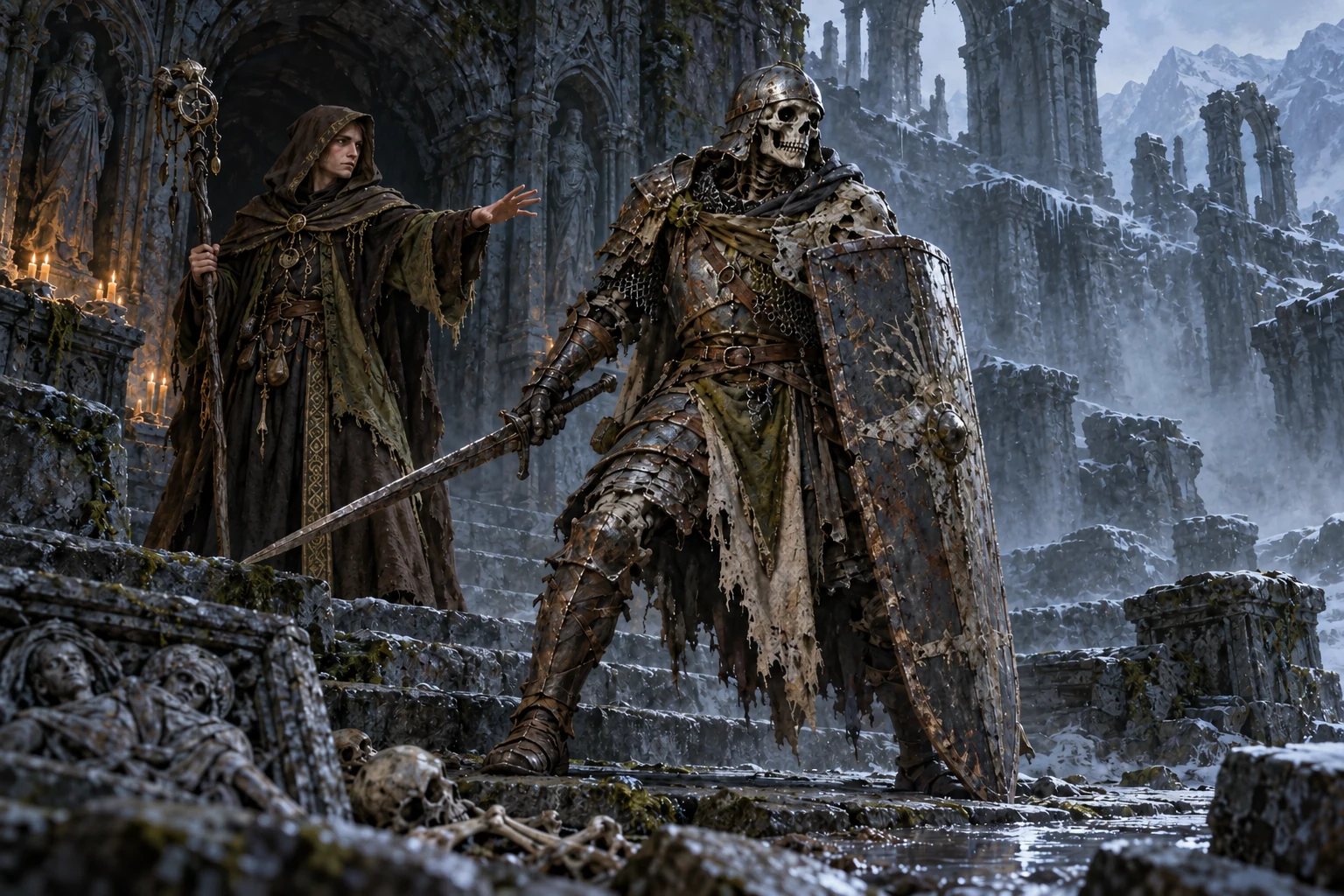
A servant with a history
Necromancy opens different undead forms, from walking dead and skeletons to powerful later servants. They earn experience and gain levels through fighting. Banishment can preserve some earned experience for a later servant of the same type.
Give it a place in the line
Some undead use weapons and armour. Prepare their equipment and choose a combat style before the fight. An invited servant can join its owner’s party and occupy a formation place.
Power asks for care
Maintaining a servant draws on the priest’s magical reserves; exhausting them can break control. Undead need restoration suited to their nature. Their bond also matters to the group: when the owner leaves the party, the servant leaves too.
Sorcerers work differently: a bound spirit resides in a sceptre and empowers its owner’s magic. Each guild’s relationship with its companions has its own rules.
Walk the Earthpriest’s path05 / The fights you gather for
Some enemies
become stories.
Equipment monsters — “EQ monsters” to players — are powerful foes fought for prized gear. Their abilities test the whole company. These are three encounters where the next spell, the next warning and the person beside you can change the fight.
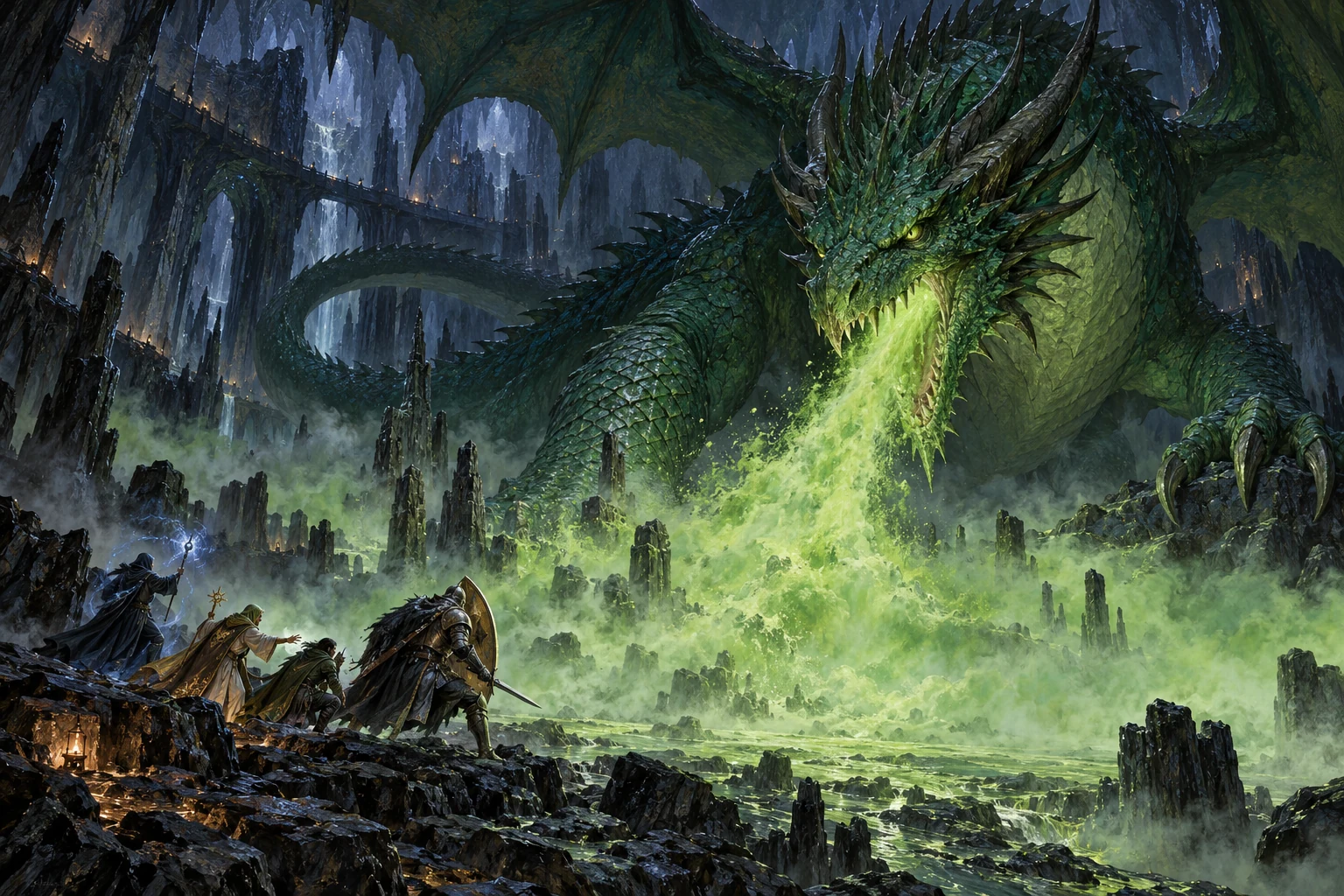
The green dragon / Acid & sorcery
Ghuatzskh
When the air itself turns against you.
Emerald scales loom above the party. Then the dragon breathes, and the cavern disappears into corrosive fumes. Holding the front is only the beginning: Ghuatzskh can tear away your protections and silence the magic you were counting on.
- A breath that lingers
- Acid strikes several opponents and leaves drifting fog behind. The danger outlasts the breath itself.
- Power stripped away
- Magical bursts remove protective effects. A temporary void of magic interrupts casting and prevents new spells in the lair.
- A company scattered
- A massive tail sweep can batter several fighters. The dragon can seize one combatant and throw them into another.
The party’s challenge Keep your bearings through lingering damage, lost protections and interrupted casting. Recovery has to be part of the plan.

The world-eater / Thunder & hunger
Ancient Behemoth
The storm has teeth.
The thunder beast rises on its hind legs, one eye dull and the other burning red. Electricity runs across its hide. A breath becomes forked lightning; a sweep of its tusks can send a companion into its jaws. The world-eater earns its name.
- Forked lightning
- Lightning breath branches through the fight, threatening more than the warrior nearest its claws.
- A living thunderstorm
- The beast brings storms over the valley and calls lightning down from the sky, splitting it across nearby combatants.
- Swallowed whole
- A player can be hurled into its jaws and carried into its belly, separated from the party and exposed to continuing acid damage.
The party’s challenge Protect the whole company and adapt when a companion suddenly disappears from the fight. A strong front line alone cannot answer every threat.
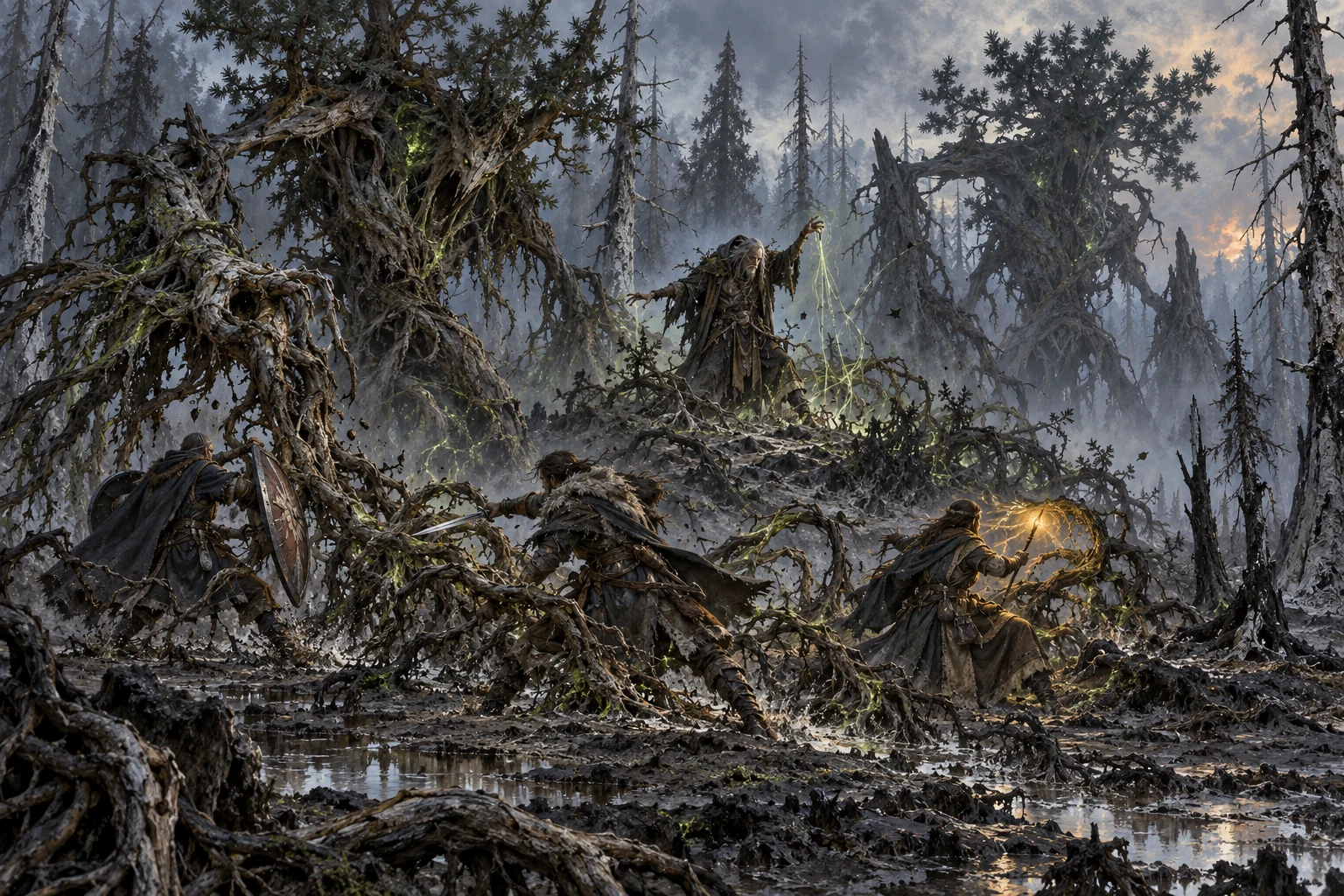
The Dark Druid / A corrupted grove
Neralath
The forest fights for him.
At the centre of a defiled pine grove stands a frail, hunched man. Living threads of power rise from the ash to his fingers. As the fight unfolds, allies take his place and corrupted trees feed strength back to him. Your enemy reaches far beyond the figure in front of you.
- A foe with a party
- Neralath calls Luctred into his own party, then withdraws into the adjoining grove while his servant takes over the fight.
- Roots of his power
- Corrupted treants rise in nearby parts of the woods. As they grow and fight, they channel healing back to their master.
- Corruption closes in
- His aura drains health and reserves. Corruptive energy can make the exits hurt to cross, adding a cost to retreat.
The party’s challenge Coordinate beyond one target and one clearing. Pressure elsewhere in the grove can undo the progress you make against the druid.
06 / Set out together
A few names.
A plan. A party.
Start with a friend or mark yourself available for a group. Choose a leader, arrange your places and agree on what you are going after. The party tools keep the practical parts close at hand.
Find your company
party availablemarks you as looking for a group;who availablefinds willing companions. Meet up, create a party and invite them. An invitation is accepted withparty join.Choose who leads
The leader guides members who are following and arranges the formation. You can stop or resume following. Leaders can appoint a vice-leader and save or restore the current party’s formation.
Keep talking
Use party speech to call targets, ask for healing and warn that you are running low. Check everyone’s health and reserves, notice missing companions and call a retreat before the front line breaks.
Share the journey
Players present at a kill share experience according to the party’s distribution;
party sharesestimates it. Dice and drawing lots help settle loot. At a bank,deposit all to partydivides coins into player members’ accounts.
Your next company starts with you
Bring something
only you would bring.
A calling, a fighting style, a well-kept blade.
There is room to make the journey your own.