What this guild is about
Give faith a place to stand.
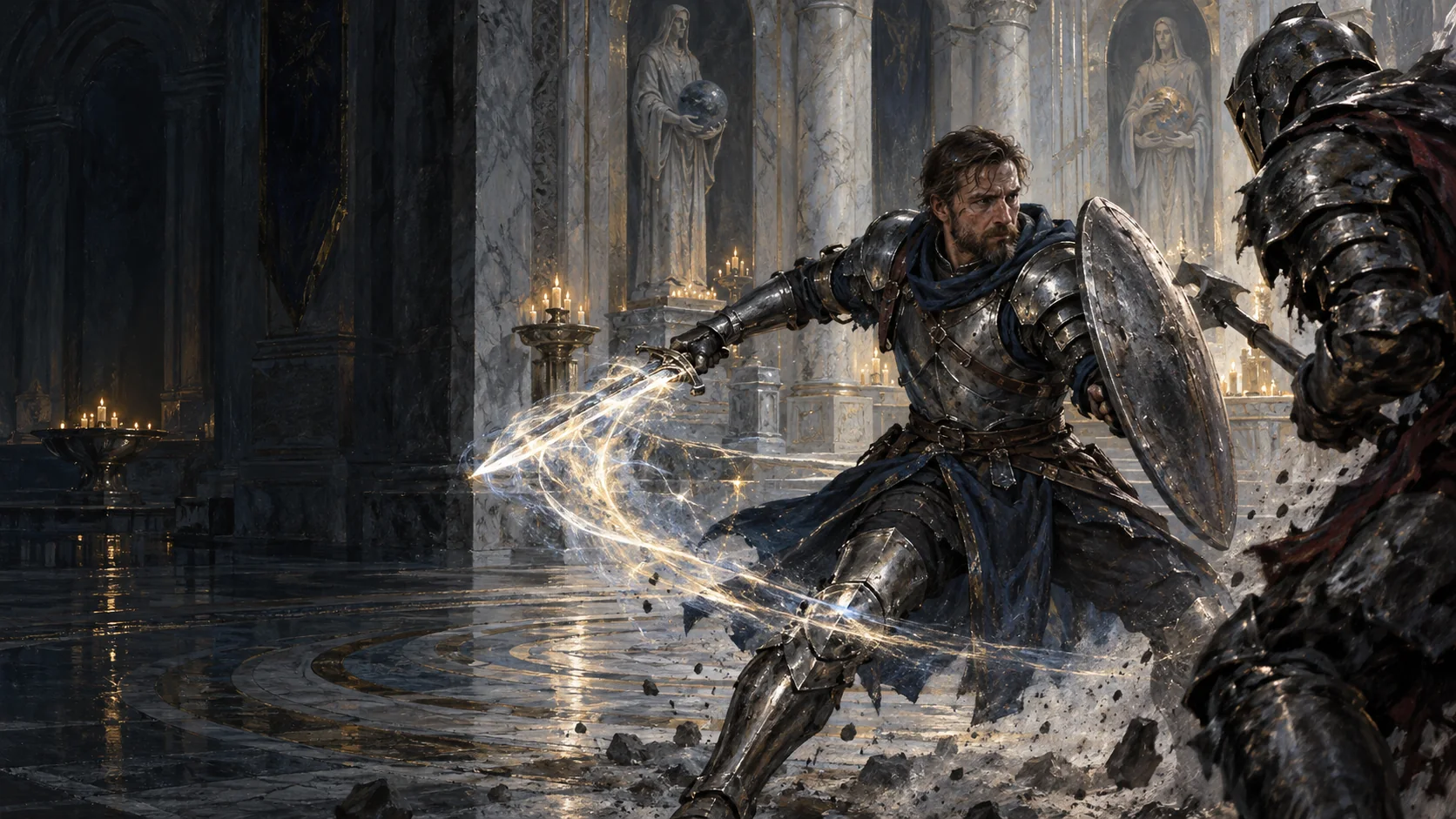
Templars bring elemental faith into armed combat. Their weapons can carry divine energy, their bonds sustain protective magic, and their later orders pursue offensive, defensive or strategic duties. Beneath the knightly image lies a more complicated institution: an order founded against chaos, now trying to find its place in ordinary service.
A Templar is about making belief answerable to action. Faith and elemental knowledge influence real protection, but a knight still has to train, take a post and endure the consequences of a fight. The order’s ideal is law, justice and the protection of others. Its present circumstances test that ideal: hired work can keep the institution alive while raising questions about who it serves. Mechanically, the same sense of responsibility appears in powers with conditions and debts. Protection can defer injury rather than erase it, and a more forceful judgement can ask you to risk your own life or standing.
You might feel at home here if…
- You want armed combat with meaningful protective magic.
- You enjoy managing resources and anticipating the end of a defence.
- You like a knightly order whose ideals are tested by ordinary duties.
Lore & origins
An order seeking a reason to endure
The Templars were formed as a hierarchical order of holy knights to oppose chaos. Their elemental learning gave them a means to protect others and uphold law and justice. The current initiation text tells a less triumphant continuation of that story. With chaotic forces described as relatively weak, the order has lost importance and public reputation. Paid service has increasingly filled the gap, and powerful knights find themselves guarding city gates or cleaning sewers. These humble duties expose a question that splendour alone cannot answer: what should an order protect when its defining war no longer supplies a purpose?
The Hall of Elements preserves the grandeur of that older mission. White and grey marble surrounds a polished black floor. Chapels lie beyond the pillar-lined walls, while a spiralling stair rises through the dome toward the Tower of Ascension. The holy Elica stone is associated with the central dais. Above, the Library of the Elements combines books, practice targets, statues and an altar. Learning, worship and armed readiness occupy the same building, showing how the knightly ideal expects mind, faith and physical practice to develop together.
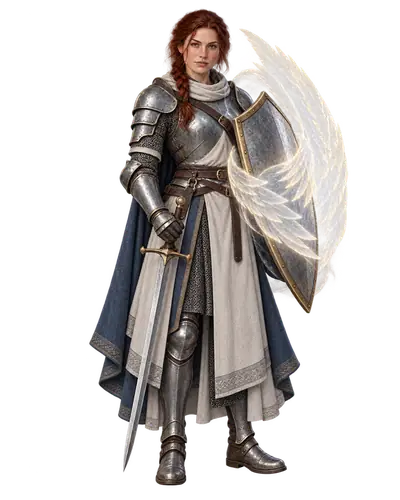
The order’s branches turn that ideal toward different duties. Archknights specialise in offensive combat and the judgement of their foes. Avatars seek to become vessels of elemental energy, with advanced training in body and mind. Preceptors take a more strategic role, using protective and retributive spells for a war party. Before those distinctions, even ordinary knighthood includes a period guarding the city. The institution’s identity is therefore visible at both ends of the scale: extraordinary elemental champions and the person who remains at a gate because someone must watch it.

A place in the world
The Hall of Elements, Vaerlon
The marble Hall of Elements opens toward its elemental chapels and rises into the Tower of Ascension. The Library above brings study and martial practice together. This is an institution in the life of Vaerlon, where admission to a sacred order eventually includes the practical obligation of guarding the city.
Explore the world around themTheir role in a fight
Carry your convictions into danger.
Templars combine weapon fighting with elemental powers whose effectiveness depends on faith, bonds and supporting training. Blow of Justice provides a distinctive armed attack, while protective spells help a knight endure dangerous pressure. Later orders make the role more specific: offensive Archknights, defensive Avatars and strategically protective Preceptors represent different ways of bringing the same elemental calling into combat.

With a party
A Templar can hold a place in the line while contributing the powers their chosen order develops. Preceptors explicitly train to protect a war party with retributive magic. Coordination matters because protection has conditions and a resource cost. Tell companions when a defence is nearing its end, and plan recovery around the damage that Shield of Faith can delay rather than permanently remove.
On your own
When fighting alone, choose how to divide attention between the weapon attack, protective magic and elemental resources. Blow of Justice offers a straightforward mode alongside riskier judgement and sacrifice options. Shield of Faith can buffer a dangerous exchange, but the end of that protection is part of the encounter. The guild rewards planning through both the immediate clash and its aftermath.
The choices you make
Faith is not a guarantee of consequence-free power. Shield of Faith can return a reduced portion of deferred injury when it expires, and its effectiveness is halved without a shield. Judging a more honourable opponent risks punishment; sacrificing life strengthens a blow at a personal cost. Bond strength and its recovery also matter, so the knight must manage more than weapon endurance alone.
Power, explained
Signature abilities
Blow of Justice
Weapon and elemental judgement
Imbue a weapon with divine elemental energy and strike. The ordinary attack can be extended into a judgement that compares community achievements, or a sacrifice of life force for greater force. Judging someone more honourable risks punishment. Weapon skill, faith, elemental focus and physical and mental ability all contribute to the result.
Shield of Faith
Protection with a delayed cost
Wrap the caster in protection that mitigates injury and can buffer severe blows. Some of the damage avoided returns in reduced form when the spell expires, with a warning beforehand. Its effectiveness is halved without a shield, so equipment and the timing of recovery matter as much as the initial cast.
Elemental Bonds
The strength behind the spells
Each elemental bond measures a relationship that supports Templar spell power and recovers its own strength. The bonds are part of what makes elemental protection dependable. Develop them alongside faith and the spells you intend to use, and think of a prepared knight as someone maintaining several connected resources rather than only a weapon and armour.
Channel Elemental Energy
Manage the elemental reserves
Improve control over bond strength, including its recovery, capacity and the effectiveness or duration of some spells. The skill also allows energy to be transferred from one elemental bond to another. Transfer efficiency depends on training and piety, creating a practical way to respond when the demands of a battle favour a particular element.
These are examples from the guild’s wider training. Availability and strength depend on your guild path, skills and current game rules; an initiate starts with a smaller repertoire.
Learning the tradition
An initiate’s oath, a knight’s choices.
Initiation leads into the Knightly Order, where elemental learning continues beside weapon training and city service. The later paths offer distinct ambitions: Archknights deepen offensive judgement, Avatars pursue extraordinary elemental defence, and Preceptors specialise in strategic party protection. Choose the role you want to perform, then develop its supporting faith, bonds, combat skills and virtues together. The strongest-looking spell is not independent of that groundwork. A Templar’s progress is both martial and devotional, with the order’s duties reminding you that status is attached to service as well as personal power.
For a first character, the guided builder offers a selection of starting professions. The complete guild reference and in-game teachers explain entry requirements and further training.
-


Weapon combat · Defence
Army
Train for the moment another person needs you to stand firm. Choose agile weapon work or armoured endurance.
-


Healing · Air magic
Airpriests
Pthuule’s servants restore companions and command the breath that sustains them. Mercy and the fury of Air share one calling.
-


Channeling · Magical defence
Waterpriests
Albila’s armoured channelers preserve an ancient magical art. A shield, a free hand and control of mana make a distinctive defender.
A place in the valley
Find the people
you want to become.
Choose a race and a first profession. Meet your teachers, learn your craft, and find the companions who will come to rely on it.
Icesus is a persistent text RPG. The paintings illustrate its world; you play through words.